
Analysts said declining sales across the board from high end to low end stores points to the possibility of prolonged recession with consumers refraining from spending because of weakening job markets with hundreds of thousands losing jobs. Even those who have jobs are cutting down on spending because of fears of possible lay off as no one is sure how long the economic difficulties would last.
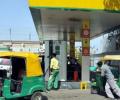
CNG price in the national capital and adjoining cities on Tuesday was hiked by Rs 0.50 per kg, while an imminent increase in petrol and diesel price has been put on wait-and-watch mode for more clarity on global oil prices. CNG price in NCT of Delhi has been increased to Rs 57.51 per kg from Rs 56.51, according to the information posted on the website of Indraprastha Gas Ltd - the firm which retails CNG and piped cooking gas in the national capital. Following the firming up of international gas rates, IGL has been raising CNG rates by up to 50 paise (Rs 0.50) per kg periodically. Prices have gone up by about Rs 4 per kg this year alone.
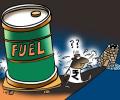
A rise in petrol and diesel consumption can help the government cut cesses on the fuels by Rs 4.5 a litre without impacting revenue collections of FY21, and help cool off the pressure on inflation, domestic rating agency ICRA said on Friday. Petrol consumption is estimated to increase 14 per cent in 2021-22 and diesel by 10 per cent on the lower base, rise in mobility and economic recovery, ICRA said. The rating agency added that it will result in an additional Rs 40,000 crore in revenue for the government through higher collections of the cess.

Riding on this change in aspirations, V-Mart a value retail chain is growing close to 22 per cent year-on-year, and is aggressively looking to expand its footprint, with 60 new stores this year.

After record fund raising, Reliance Industries now has a strong balance sheet with high liquidity that will support growth plans for its three hyper-growth engines, Jio, Retail and oil-to-chemicals, according to the firm's chairman and managing director Mukesh Ambani. In the company's latest annual report released on Wednesday, he said the company sold minority stakes in Jio Platforms -- the unit that houses its telecom and digital business -- and retail arm for almost Rs 2 lakh crore and raised another Rs 53,124 crore through rights issue.

The wholesale price-based inflation rose for the second consecutive month in February to 4.17 per cent, as food, fuel and power prices spiked. The WPI inflation was 2.03 per cent in January and 2.26 per cent in February last year. After witnessing months of softening of prices, the food articles in February saw 1.36 per cent inflation. In January it was (-) 2.80 per cent.
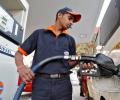
Diesel price on Monday went past the Rs 98-a-litre mark in a few places of Rajasthan as a relentless increase in fuel prices took rates to record-high levels. Petrol price was increased by 29 paise per litre and diesel by 26 paise a litre, according to a price notification of state-owned fuel retailers. The increase - 16th this month - pushed petrol and diesel prices to a fresh all-time high across the country. Sri Ganganagar district of Rajasthan saw petrol price climb to Rs 105.24 a litre and diesel to Rs 98.08 per litre.
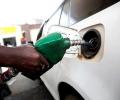
Petrol price on Saturday crossed the Rs 100-a-litre mark in Mumbai after the 15th increase in fuel prices this month. Petrol price was increased by 26 paise per litre and diesel by 28 paise a litre, according to a price notification of State-owned fuel retailers.

The wholesale inflation rose to a 13-month high of 1.26 per cent in April fuelled by rising prices of food articles, especially vegetables, amid expectations of RBI holding interest rates in the policy review next month. The wholesale price index (WPI) based inflation has been rising for two months in a row.
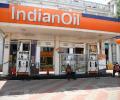
Petrol price inched towards the Rs 100-mark in Mumbai on Tuesday after fuel rates were hiked again. Petrol price was increased by 23 paise per litre and diesel by 25 paise a litre, according to a price notification of state-owned fuel retailers. The hike - 13th this month - pushed petrol and diesel prices to record-high levels across the country.
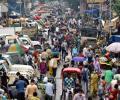
The Reserve Bank on Friday retained inflation projection at 4.5 per cent for the current financial year, lower than 5.4 per cent in the last fiscal. Assuming a normal monsoon this year, CPI (consumer price index-based) inflation for the current year is projected at 4.5 per cent, with Q1 at 4.9 per cent, Q2 at 3.8 per cent, Q3 at 4.6 per cent, and Q4 at 4.5 per cent.

Wholesale inflation rate declined marginally to 0.2 per cent in February compared to 0.27 per cent in the preceding month despite a slight uptick in the food basket. The Wholesale Price Index (WPI)-based inflation was in the negative zone from April to October and had turned positive in November at 0.26 per cent. The inflation in February 2023 was 3.85 per cent.

Billionaire Mukesh Ambani's Reliance Industries Ltd on Friday reported a 46 per cent jump in net profit for the three months ended June on the back of bumper earnings from oil and telecom businesses. The oil-to-retail-to-telecom conglomerate's consolidated net profit rose to Rs 17,955 crore during April-June period -- the first quarter of 2022-23 fiscal year -- from Rs 12,273 crore in the year-ago period, it said a stock exchange filing.

The company raised Rs 53,124 crore through a rights issue and sold nearly 33 per cent stake in Jio Platforms Ltd - the firm that houses telecom business and apps - to likes of Facebook and Google for Rs 152,056 crore.

Retail inflation dropped marginally to 7.01 per cent in June mainly due to slight easing in prices of vegetables and pulses, though it still remained above the Reserve Bank's comfort level for the sixth month in a row. The consumer price index (CPI) based inflation stood at 7.04 per cent in the preceding month of May and 6.26 per cent in June 2021. Inflation in the food basket in June 2022 was 7.75 per cent, compared to 7.97 per cent in the previous month, as per the National Statistical Office (NSO) data released on Tuesday.
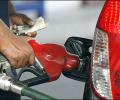
Petrol price was on Monday hiked by Rs 2.19 a litre and diesel by 98 paise per litre.

Why does the world's fastest-growing major consumer of energy fail to attract investments in oil and gas? This is a question worth pondering after private sector conglomerate Reliance Industries Ltd (RIL) failed to close a $15-billion downstream asset deal with Saudi Arabia's national oil company, Aramco. It's understandable if multi-billion dollar investments in oil and gas projects or deals involving state companies that need to traverse a complex bureaucracy at state and federal levels and the corridors of ministries unravel. However, Mukesh Ambani-run RIL, India's most successful energy company, is not typically known to fumble on closing deals (Ambani closed deals worth around Rs 2 trillion early last year in telecom and retail with blue chip investors).

Congress president Mallikarjun Kharge alleged that the price of domestic cooking gas cylinder has been raised by Rs 50 and that of commercial gas cylinder by Rs 350 at a time when every person in the country is facing the brunt of high inflation.
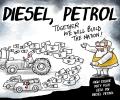
Petrol and diesel price soared to an all-time high across the country on Friday after rates were hiked again by 25 paise and 30 paise a litre, respectively. The price of petrol in Delhi rose it its highest ever level of Rs 101.89 a litre and to Rs 107.95 in Mumbai, according to a price notification of state-owned fuel retailers. Diesel rates too touched a record high of Rs 90.17 in Delhi and Rs 97.84 in Mumbai.
There is no payment problem for Russian crude, Petroleum and Natural Gas Minister Hardeep Singh Puri said on Wednesday. He said there is no proposal to cut retail fuel prices at the moment. Addressing a press conference, the minister said India enjoys a buyers' position and foreign suppliers are approaching Indian companies with offers to sell oil.
Diesel price on Friday was hiked by 20 paise per litre - the first increase in rates in over two months - as international oil prices neared their highest since 2018. Price of diesel was hiked to Rs 88.82 per litre in Delhi and to Rs 96.41 in Mumbai, according to a price notification of state-owned fuel retailers. Petrol price was not changed. It costs Rs 101.19 a litre in Delhi and Rs 107.26 in Mumbai.

Capital expenditure (capex) by 54 large central public sector enterprises (CPSEs) and five departmental arms with an annual capex target of Rs 100 crore and above has reached around 42.5 per cent of their annual target of about Rs 7.33 trillion in this financial year so far, a senior official from the Ministry of Finance told Business Standard. "The Centre is pushing the big public undertakings in the infrastructure and refinery sector to achieve 90 per cent of their target by the end of the third quarter," he said. The capex by this group of CPSEs stands at around Rs 3.1 trillion in the April-August period so far.
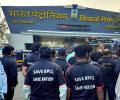
Privatisation of BPCL, which was dubbed India's biggest ever, has been stalled with just one bidder left in the fray after two others walked out over issues such as lack of clarity in fuel pricing, a top source said. The government had planned to sell its entire 52.98 per cent stake in Bharat Petroleum Corporation Ltd (BPCL) and invited Expression of Interest from bidders in March 2020. At least three bids came in by November 2020 but only one remains now after the others withdrew from the race.

India's fuel demand in May slumped to its lowest in nine months as restrictions to curb the second wave of COVID infections stalled mobility and muted economic activity. Fuel demand fell 1.5 per cent to 15.1 million tonnes despite the low base of May 2020 and was down 11.3 per cent when compared to the previous month, according to data from the Petroleum Planning and Analysis Cell (PPAC) of the oil ministry. India was under one of the world's strictest lockdowns in May last year, which brought all mobility and economic activity to a grinding halt.
Consumption of petrol and diesel will contribute more than half of the Centre's exclusive share in GST in FY20, reports Abhishek Waghmare

Reliance has a 24 per cent conversion rate of 'oil-to-chemicals' at present and may be targeting 70 per cent conversion.
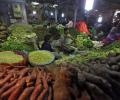
Wholesale price-based inflation remained in the negative territory for the fifth straight month in August at (-)0.52 per cent, but prices of food articles and fuel showed an uptick. The wholesale price index (WPI) based inflation rate has been in the negative since April and was (-)1.36 per cent in July. In August last year it was 12.48 per cent. Inflation in food articles remained in double digit at 10.60 per cent in August, lower than 14.25 per cent in July.
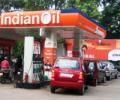
The government on Thursday sanctioned Rs 17,772 crore (Rs 177.72 billion) cash subsidy to fuel retailers like IOC to cover for half of the revenues they lost on selling diesel and cooking fuels below cost in the September quarter.
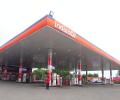
This is the first time that petrol sales in the world's third-largest oil importer have risen since the March 25 nationwide lockdown crippled economic activity and sent demand plummeting.
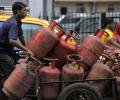
No immediate comment was available from airlines on the impact of the price hike on passenger fares.
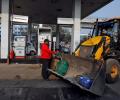
Petrol price on Friday inched closer to the Rs 100-a-litre mark in Mumbai while diesel crossed the Rs 91 mark after oil companies raised rates again. Petrol price was increased by 19 paise per litre and diesel by 29 paise a litre, according to a price notification by state-owned fuel retailers. The hike -- 11th this month -- pushed petrol and diesel prices to all-time high levels across the country. In Delhi, petrol rates climbed to Rs 93.04 a litre and diesel rose to Rs 83.80.

Equity markets may witness a gradual up-move this week with some volatility as both election and earnings season are nearing their end, analysts said, adding that global trends and trading activity of foreign investors would hold significance in dictating investors' sentiment. Benchmark indices, which had a record-breaking rally last week, would also track global oil benchmark Brent crude and the rupee-dollar trend. The monthly derivatives expiry on Thursday may also fuel volatility in markets.
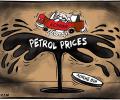
The logic of deregulation was that the consumer was protected no matter what the price of crude. But now the reverse has happened. The government is protected no matter what the price of crude, observes Aakar Patel.

Govt unlikely to cut excise duties to compensate for higher global prices, say analysts.

The Congress took out marches and observed bandh at several places on Saturday to protest against rising fuel prices.
Since May 1, the dynamic fuel pricing model has been applied on a pilot basis in 5 cities
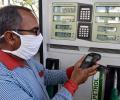
Petrol price on Thursday crossed the Rs 100-a-litre mark in Thane district of Maharashtra, while it was hovering a tad below that level in Mumbai, after fuel prices were raised again.

On Thursday, Oil Minister Dharmendra Pradhan had stated that the government was reworking the subsidy-sharing formula.
The government's decision to raise fuel prices in June has scuttled the oil companies' plans to reduce their losses from retail fuel sales as consumers are buying less of premium fuels, which is more expensive than normal fuels.
Reserve Bank on Thursday retained the growth and inflation projection at 7.2 per cent and 4.5 per cent respectively for the current fiscal amid expectations of a normal monsoon. In its last bi-monthly monetary policy review in June, RBI had projected real GDP growth and retail inflation at the same.
